
David A. moved his Myrtle Beach, South Carolina vacation rental portfolio from a large property management company to Checkmate. Checkmate reported managing eight houses and generating more than $1 million in revenue across his portfolio. David wanted more input into his properties, clearer fees and responsive help with day-to-day issues.
His move put listing ownership, communication and property care at the center of the management relationship. Owners considering a similar change can schedule a consultation about their own portfolio, existing agreement and transition needs.

David’s eight-house portfolio and starting point
A Checkmate client since 2022, David built a portfolio of large houses in the Myrtle Beach area. Checkmate summarized the homes as having three or more bedrooms, three or more bathrooms and space for eight or more guests. The reported revenue above $1 million covers the portfolio collectively. Owner profit depends on the management fees and operating expenses paid from rental income.
David’s cleaner referred him to Chad and Checkmate after working with the company. He wanted more attentive service and a clearer understanding of management costs. Comparing Myrtle Beach management companies involves weighing these service responsibilities alongside each proposal’s fees.
Owner-controlled accounts and responsive management
Checkmate reported that David’s previous manager controlled the booking accounts and listing assets. During the transition, Checkmate began building listings and accounts that David would own. For an owner, account control affects access to listing content, booking records, and the practical work involved in a future management change. A Myrtle Beach management proposal should make those responsibilities explicit.
David valued personalized management and quicker attention to property issues. Checkmate reported more bookings at higher prices within weeks of the switch, followed by David adding two properties within a year. For an owner comparing managers, those results make communication, account control and day-to-day property care useful topics to include in a proposal.
What changed during David’s management handover
David wanted input into decisions about his own houses. He described his previous company as lacking attention to detail, and said his cleaner recommended Chad because of her experience working with Checkmate. Her referral came from someone already involved in the practical care of his rentals. David’s concerns covered both how his properties were managed and a complicated fee structure.
Within days of the switch, David reported greater control over the portfolio. Within weeks, Checkmate reported more bookings at higher prices. Within a year, David had the confidence to add two properties. Access and decision-making changed first, booking activity followed, and a later purchase decision reflected David’s confidence. For another owner planning a transition, account access, reservation continuity and future purchases each deserve their own timetable.
For the account transition, Checkmate described building David’s reputation on booking-site accounts and listings he would own. Listing photographs, descriptions, access permissions, reservation records and payout arrangements each need an assigned owner during that process. An owner-held login and a manager’s operating access serve different purposes: the owner retains control of the asset while the manager handles the agreed daily work. A written handover schedule can assign a responsible person and completion date to each account, reservation and outstanding guest issue.
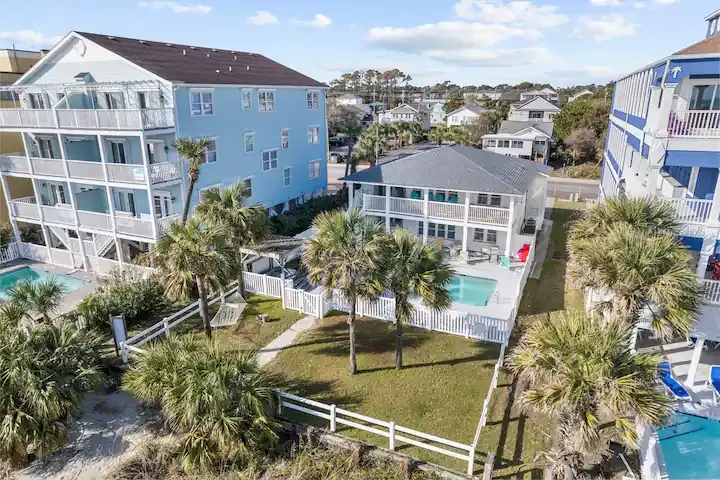
The pictured home’s layout creates specific operating work
The host listing for the pictured oceanfront house identifies it as a North Myrtle Beach home with eight bedrooms, 14 beds and four bathrooms. The host advertises sleeping space for 26 people, including four king beds. This large home shows the range of spaces and equipment a manager needs to keep ready for guests.
The host describes two separate exterior entrances, one for each floor. Each floor contains four bedrooms, two bathrooms, its own kitchen and its own living area. The floors have no interior connection. That layout makes arrival instructions especially important: guests need to understand which entrance reaches each sleeping area and how members of a large group move between floors. The listing also describes the lower floor and pool area as accessible without stairs. A manager needs to communicate those specific features accurately when guests discuss access needs.
Two kitchens and two living areas add separate spaces to the turnover inventory. Fourteen beds require a linen plan matched to the bed sizes and sleeping arrangements. The host lists smart TVs in both living rooms and all eight bedrooms, giving the turnover team ten televisions to account for when checking remotes, power and guest-ready operation. A detailed turnover checklist helps the team give each room the attention David valued.
Pool, HVAC and repair schedules in the current host description
The same host description sets out a recurring maintenance schedule. It says HVAC filters are replaced every four weeks, with professional cleaning and maintenance twice a year. Pool and hot-tub cleaning and chemical testing are described as occurring two or three times a week, depending on the season. Landscaping is listed at one or two visits a month, and pest control once every two months. The host also describes professional cleaning, linen, appliance-repair, handyman and plumbing support.
Those frequencies make the service responsibilities easier for an owner to discuss. A turnover clean, a pool-service visit and an HVAC appointment address different needs and may happen on different days. The management plan should identify who schedules each provider, records completed work, reports a missed visit and authorizes an urgent repair. The listing describes same-day or after-hours support through several service providers; that is the host’s description of this home’s arrangements, with costs and availability governed by the relevant service agreements.
David appreciated quick responses to issues both large and small. For a home with a pool, hot tub, two kitchens and separate entrances, a clear issue log gives that expectation a practical form: the guest’s report, the assigned provider, owner approval where required, the work completed and the follow-up with the guest. Another owner can use the same categories to compare proposals while keeping their own property’s equipment, layout and service needs in view.
Ten owner lessons from this transition
The following lessons translate the reported experience into decisions an owner can make during a management change. They describe planning considerations rather than additional results achieved by David.
- Separate portfolio revenue from owner income. Gross booking revenue comes before management fees and operating expenses. Compare owner proceeds after the same expense categories across managers. Oceanfront rental income also depends on the individual home’s costs and seasonal booking pattern.
- Document account ownership. Record who holds the booking-platform account, listing content, photographs, and payment access in the management agreement.
- Plan listing continuity. A change of account or listing can affect the transition workload. Map existing reservations and guest communications before the handover.
- Define the fee base. A percentage of nightly rental revenue differs from a percentage applied to cleaning charges or other collections. A written proposal should identify the amounts included.
- Assign guest communication. Establish who handles arrivals, access problems, and messages during the changeover so each reservation has a responsible contact.
- Set repair approval limits. Written spending limits and an emergency process give the manager a clear path to resolve property issues.
- Retain property records. Keep inspection reports, repair invoices, warranties, and inventory records accessible to the owner.
- Compare equivalent reporting periods. Seasonal demand changes the meaning of a revenue comparison. Use matching dates and account for owner stays and maintenance closures.
- Identify each property’s municipality. Myrtle Beach and North Myrtle Beach are separate cities. Use the property address when determining the applicable local requirements.
- Evaluate expansion using owner cash flow. David’s reported addition of two houses reflects his own decision. A purchase budget for another South Carolina rental should include financing, insurance, upkeep, reserves, and the buyer’s own income assumptions.
Current Myrtle Beach management pricing
Checkmate’s Myrtle Beach management fees start from 10% of nightly rental revenue, with a 10%–15% range confirmed after property review. Homes near the beach or in strong locations favor the lower end. At a 10% rate, $1,000 in nightly rental revenue produces a $100 management fee. At 15%, the same fee base produces a $150 fee. Cleaning and additional fees are excluded from the commission calculation.
This current offer is separate from David’s historical results. A management consultation covers management from 10%, the proposed services, and the costs for your own property.
Compare portfolio revenue with owner proceeds
Checkmate reported more than $1 million in revenue across David’s portfolio. Gross revenue pays for several different obligations before it becomes owner income. Management commission, cleaning, pool service, repairs, utilities and insurance each affect the amount available for debt payments, reserves and owner distributions. A house with extensive amenities can require several service providers even during a week with few arrivals.
For a management comparison, organize each house’s nightly rental revenue and expenses over the same 12-month period. Record owner stays and maintenance closures alongside paid bookings, so a reduction in available nights remains visible. Apply each proposed commission rate to the same defined nightly-rent base, then include the separately charged services and operating expenses. Today’s from-10% offer belongs in a current proposal for the owner’s property; David’s historical portfolio revenue and reported experience remain separate. This approach shows which responsibilities a manager will take on and how the proposed arrangement affects the owner’s expected cash flow.
Bottom line
David moved toward owner-controlled listings, more direct communication and management that addressed his property concerns. Checkmate reported eight properties, more than $1 million in portfolio revenue and two properties added within a year. His experience shows why account ownership and responsive property care belong alongside fees in a management decision. For another owner, the useful comparison is the proposed agreement’s account ownership, service responsibilities, fee base and expected net cash flow for their own houses.