
Checkmate provides full-service Airbnb management in Myrtle Beach, South Carolina, from 10% of nightly revenue. Rates range from 10% to 15% after property review, with near-beach and other strong locations favoring the lower end. Owners retain their listing, reviews and payouts while the management team coordinates daily operations.
Myrtle Beach Management Services
Management covers listing preparation, nightly pricing, guest communication, cleaning coordination and maintenance support. Listing work establishes the home’s amenities and guest instructions. Pricing work adjusts nightly rates to the property and booking calendar. Guest support handles arrival instructions and questions during the stay.
Cleaning coordination prepares the property between bookings. Maintenance coordination addresses repairs and property needs through local support. The property proposal defines the agreed service scope, responsibilities and charges for the home.
Turnovers, access and repair decisions
A workable turnover plan starts with the time between checkout and the next arrival. Laundry, a full kitchen reset, bathroom cleaning and an inspection all need to fit inside that window. Larger homes and properties with pools have more tasks to coordinate. A clear handoff records the completed cleaning, missing supplies and any damage so the next guest receives accurate arrival information.
Condominiums add building-specific details: parking passes, elevator access, front-desk hours, amenity wristbands and delivery restrictions. These instructions belong in the listing and arrival messages. A guest who knows where to park and which entrance to use can reach the unit with fewer arrival problems. For detached homes, the operating plan also needs access arrangements for cleaners, repair vendors and any pool service.
Repair responsibilities deserve the same precision as the management percentage. The agreement should identify routine spending authority, the owner’s approval threshold and how urgent work is handled. An air-conditioning failure during an occupied stay needs a contact and access plan; a planned furniture replacement can follow an owner-approved schedule. Vendor invoices, supply purchases and management charges need separate treatment in the owner’s accounting.
Myrtle Beach Management Fees
Checkmate’s Myrtle Beach management starts from 10% of nightly revenue, with a 10%–15% range after property review. Near-beach and other strong locations favor the lower end. The final percentage depends on the reviewed property and appears in the property-specific proposal.
| Fee item | Myrtle Beach offer |
|---|---|
| Management percentage | From 10%; 10%–15% after property review |
| Fee base | Nightly rental revenue |
| Location review | Near-beach and other strong locations favor the lower end |
| Owner control | Owners retain their listing, reviews and payouts |
Myrtle Beach vacation rental management fees are one part of the operating budget. Cleaning, maintenance, supplies, platform charges, insurance and taxes can affect owner income. The proposal establishes how the property’s services and costs are handled.
What the percentage means in dollars
For an illustrative $5,000 in nightly rental revenue, a 10% management fee is $500 and a 15% fee is $750. That leaves $4,500 or $4,250 before the property’s other costs. This example describes fee arithmetic; it makes no prediction about bookings or earnings. Cleaning charges, taxes and refundable deposits should be identified separately so the proposal’s fee base is clear.
Comparing managers requires the same property, calendar and cost categories. A lower advertised percentage can cover a different set of tasks, while maintenance labor, linen service, photography or onboarding may have their own charges. A useful written comparison records who performs each task, who pays each expense and how an owner ends the agreement. The combination determines the practical cost of the service.
Myrtle Beach Waterfront Property Example
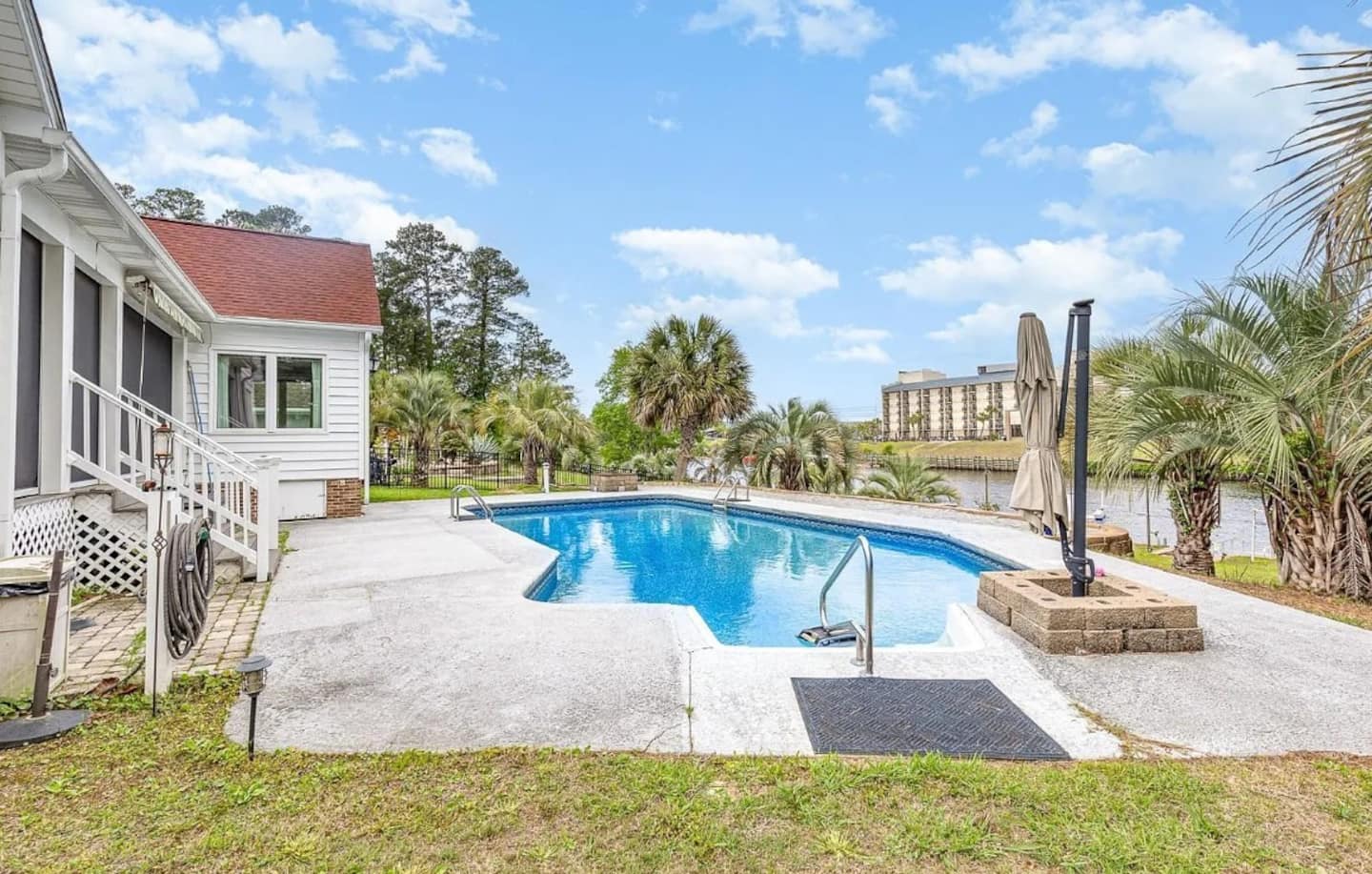
An Intracoastal waterfront home has different access, amenity and maintenance needs from an oceanfront condominium. This photograph illustrates a waterfront property setting. Each property receives its own management review and fee proposal.
Myrtle Beach Property Types and Locations
Myrtle Beach short-term rentals include oceanfront condominiums, beach houses and inland homes. Bedroom count, parking, pool access and distance to the beach determine the operating needs of each property. Condominium rules and shared amenities also affect guest instructions and maintenance coordination.
Oceanfront properties serve guests seeking direct beach access. Market Common offers a setting near shops, dining and recreation. Intracoastal Waterway homes provide a different waterfront setting, with access and amenities specific to each property. North Myrtle Beach and Murrells Inlet are separate nearby destinations with their own local requirements.
Match the operating plan to the address
“Oceanfront,” “ocean view” and “near the beach” describe different guest experiences. Listing photographs and directions should explain the actual route to the sand, including roads to cross, shared access points and any parking arrangements. A balcony view alone leaves those access details unanswered. Accurate descriptions help guests select a property that fits their trip and give the management team a concrete set of promises to deliver.
For a condominium, the association’s rules affect occupancy, pets, parking and use of shared facilities. An amenity can close for scheduled work even while the unit remains available. Owner and manager need a way to receive those notices and update guest information promptly. For a waterfront house, dock access and pool use require property-specific instructions; the pictured Intracoastal home’s setting establishes neither beach access nor permission for every water activity.
Myrtle Beach Licensing and Permitted Rental Use
All rental-property owners in the city need a business license. The City of Myrtle Beach Business License Division administers business licensing, local accommodations tax and hospitality fees. All applications receive zoning review; inspections and additional approvals depend on the activity. The city lists April 30 as the annual business-license renewal deadline.
The city describes an in-person application process that generally takes seven to ten business days, depending on the activity, and says applicants receive their license after the required approvals. A launch calendar needs time for that review before the property accepts stays. The city’s review establishes whether the business can operate at the proposed location; the building’s rental restrictions and the owner’s insurance require their own attention.
Property eligibility depends on the parcel’s zoning and applicable building or condominium restrictions. Owners remain responsible for licensing, taxes and permitted property use throughout the management agreement. The property’s street address and governing jurisdiction belong in the onboarding record alongside its license and operating restrictions.
Nearby Grand Strand destinations span separate municipal and county jurisdictions within South Carolina. A Myrtle Beach mailing address alone provides insufficient detail to select the applicable local licensing process. The parcel’s actual jurisdiction determines which office and rules govern the rental.
Myrtle Beach Revenue and Occupancy Planning
Myrtle Beach oceanfront rental income varies by property size, location, amenities, availability and nightly rates. Gross booking revenue and net owner income measure different amounts. Operating expenses and the agreed management fee reduce the amount retained from rental revenue. Purchase and financing costs, association charges, insurance and maintenance also affect the investment budget.
Occupancy measures booked nights against available nights. Owner stays and blocked maintenance dates affect the available-night denominator. Beach-season demand and the property’s amenities influence booking patterns. A property-specific operating plan uses the home’s booking history, availability and expenses to estimate revenue and owner income.
Build a monthly owner budget
A monthly forecast connects available nights, expected booked nights and the nightly rate for the same period. For example, 20 booked nights at an illustrative $200 nightly rate produce $4,000 in nightly revenue before fees and expenses. Changing either assumption changes the result. Summer and winter therefore need separate assumptions, especially when an owner reserves peak weeks for personal use.
A higher occupancy percentage can accompany lower total revenue when nightly prices fall. Longer reservations can reduce turnover frequency while changing the achievable nightly rate. The appropriate comparison follows revenue, stay length, cleaning costs and owner proceeds together. Property-level booking history provides a stronger starting point than an area-wide average for a home with a different size, location or amenity mix.
Reserves cover costs that arrive unevenly: appliance replacement, storm preparation, repairs and annual insurance bills. Association dues and financing can continue through unbooked periods. A forecast that allocates those costs throughout the year gives the owner a clearer view of the cash needed to operate the property. Checkmate’s management percentage is one input in that budget.
Get a Myrtle Beach Property Proposal
A property review establishes the home’s location, condition, amenities, rental availability and service needs. Existing listing details and booking history help define the operating scope. The resulting proposal gives the management percentage and the responsibilities attached to the agreement.
Discuss Myrtle Beach management from 10%, with a 10%–15% range confirmed after reviewing your property.
Prepare an existing rental for a management handoff
For an operating rental, the handoff needs a record of future reservations, guest payments, owner stays and outstanding maintenance. Calendar availability should remain consistent while access permissions and guest communication responsibilities change. Owners retaining their listing and reviews should keep their account access and grant the management permissions required for the agreed work.
The property proposal can then specify a launch sequence: document the home and inventory, establish access, record building rules, prepare guest instructions and assign each upcoming turnover. Existing bookings need a named team responsible for their arrival messages and support. This gives the owner a practical basis for evaluating the transition alongside the price.
Bottom Line
Checkmate’s Myrtle Beach service combines pricing and guest communication with local cleaning and maintenance coordination while owners retain their listing, reviews and payouts. Management starts from 10% of nightly revenue, with a 10%–15% range determined through property review. Near-beach and other strong locations favor the lower end. The property-specific proposal establishes the fee and service scope for the home, while the owner’s operating budget accounts for the other costs of a short-term rental.