
Checkmate offers vacation rental management for North Myrtle Beach owners, with management starting from 10% of the nightly rate and a 10%–15% range after property review. The property's location, layout, amenities, and operating needs determine the quote. Homes near the beach or in strong locations favor the lower end of the range.
A North Myrtle Beach management plan needs to cover guest communication, pricing, cleaning, repairs, and clear owner records. You can schedule a property consultation to discuss your home's address, existing bookings, owner stays, and the work you want Checkmate to handle.
North Myrtle Beach Homes and Neighborhoods
Cherry Grove, Ocean Drive, Crescent Beach, and Windy Hill give owners useful starting points for describing a North Myrtle Beach property. The individual address and building determine the practical guest experience: beach access, driveway space, building entry, elevators, and the distance between the rental and its amenities. Properties across the Grand Strand also draw on the wider Myrtle Beach vacation rental management market for guest services and vendors.
A detached oceanfront house needs a plan for exterior upkeep and outdoor equipment. A condominium also needs building-entry instructions, parking passes where required, and coordination with the association. A canal or Waterway property needs accurate waterfront descriptions and clear instructions for any permitted dock use.
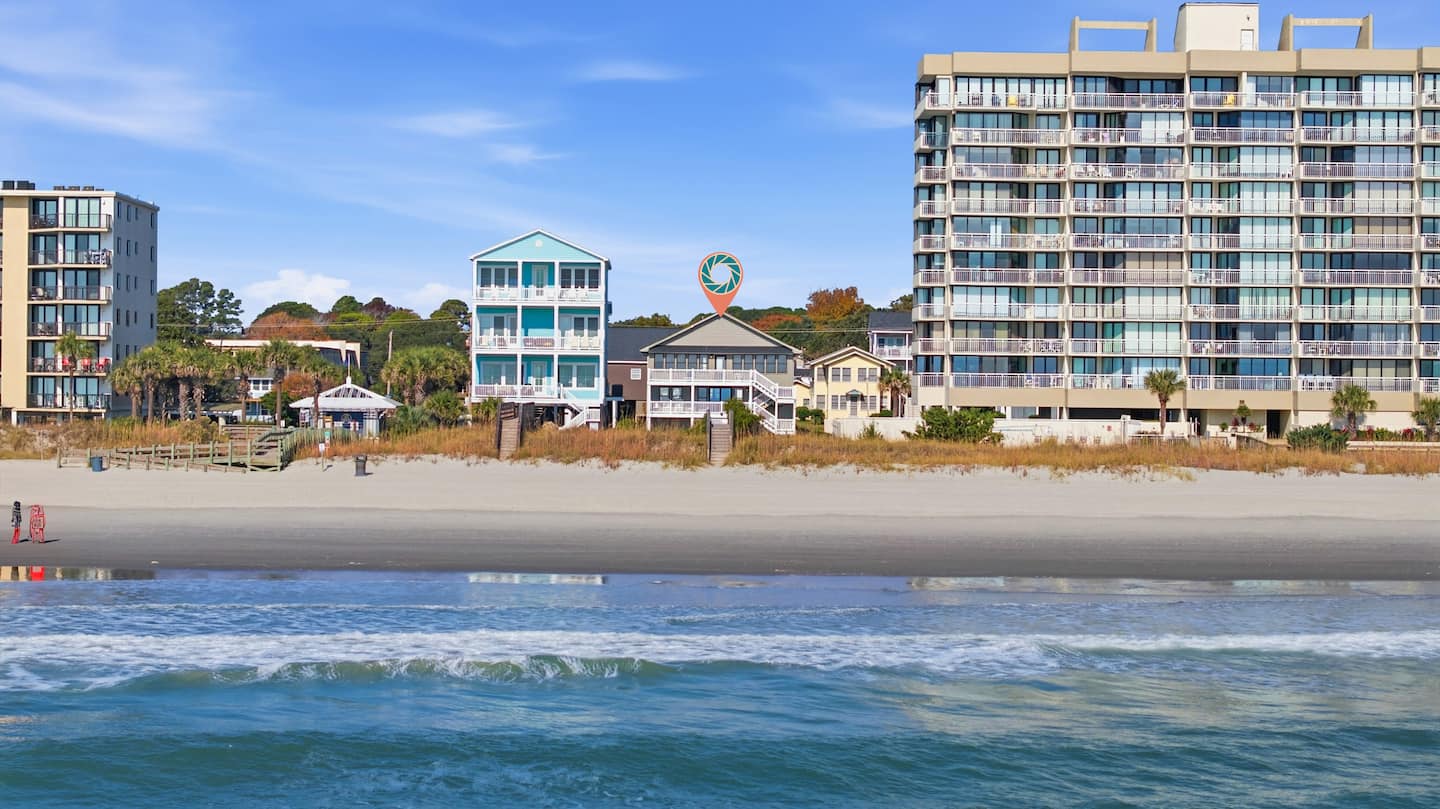
The property host's listing supplies this photograph. Listing features describe that particular home; rental permission, lawful occupancy, and the services in a management agreement need their own property records.
North Myrtle Beach Rental Licensing
North Myrtle Beach requires a business license for every short-term rental within city limits, annual license renewal, and current license information. Operators must collect and remit applicable rental accommodations taxes to the city, county, and state. The city also requires compliance with trash, parking, noise, and occupancy ordinances.
The city's short-term rental requirements state that standard licensing is the applicable process, with no additional special short-term rental zoning or permit process. Building approvals and the property's private restrictions still belong in the owner file. Association documents can govern stay lengths, pets, shared amenities, and access.
The management handoff should identify the license holder, renewal responsibility, tax accounts, and who handles each filing. Keep booking-channel collection records alongside the owner's accounts so each payment can be matched to the authority receiving it. These duties belong to the property's actual jurisdiction.
Management Fees and Owner Proceeds
At a quoted 10% management rate, a hypothetical booking with $1,000 in nightly rent has a $100 management fee. A quoted 15% rate produces a $150 fee on the same nightly rent. The example isolates the management fee; cleaning, taxes, maintenance, booking-channel charges, and other agreed costs affect the owner's remaining proceeds.
The written proposal should identify the exact rate, the charges used to calculate it, included services, and separately billed work. Comparing Myrtle Beach management fees requires the same nightly-rent base and itemized additional costs. A pool, hot tub, elevator, large deck, or multiple entrances adds operational tasks that need a named service provider and a budget. Owner statements should show nightly rent, fees, refunds, taxes, cleaning money, and maintenance separately.
Ten Steps for a Rental Handoff
Use these steps to organize the records and decisions for a North Myrtle Beach management handoff. Address-specific approvals and your existing agreements determine the details.
- Identify the property and jurisdiction. Put the street address, parcel information, building name, and government responsible for the rental in the owner file.
- Document rental permissions. Gather the business license, approved layout, association documents, and any conditions affecting guest stays.
- Record guest capacity and parking. Match the listing's guest limit to the property's lawful occupancy and identify usable parking spaces.
- Set the management scope. Record the quoted percentage, fee calculation, included work, and approval limits for additional spending.
- Reconcile existing bookings. List arrival dates, guest payments, deposits, cancellation terms, and the person responsible for each reservation during the handoff.
- Reserve owner stays. Block your dates before opening the remaining calendar and agree on cleaning and access for those visits.
- Prepare guest instructions. Document arrival access, parking, trash collection, amenity use, quiet conduct, and the contact for problems.
- Assign cleaning and inspections. Define turnover tasks, linen and supply quantities, inspection records, and who resolves damage or missing items before arrival.
- Plan repairs and storm response. Identify qualified vendors, emergency contacts, spending authority, and the person who closes or reopens the calendar when conditions affect safe stays.
- Set owner reporting and tax duties. Agree on statement timing, payout records, receipts, tax collection records, filing responsibilities, and a process for resolving discrepancies.
Pricing, Guest Service, and Property Care
A pricing plan starts with comparable homes, available dates, existing bookings, and the property's actual features. Compare houses with similar capacity and access, and record the effect of owner stays and maintenance closures on available nights. Estimates of oceanfront rental income should state their assumptions and distinguish nightly rent from guest taxes and cleaning collections.
Guest service needs a working contact from booking through departure, accurate arrival instructions, and a process for escalating urgent problems. Cleaning and maintenance need written tasks and completion records. For condominiums, building closures or shared-facility restrictions should be reflected in guest communications and calendar decisions.
During your property consultation, describe the home and the services you need, including existing reservations and any association requirements. A South Carolina rental management agreement should allocate state and local tax responsibilities alongside the work, approvals, fees, and records clearly enough for both the owner and the people servicing the property to follow.
Bottom Line
North Myrtle Beach rental management works best with a property-specific agreement that connects the quoted fee to guest service, cleaning, maintenance, and owner reporting. Budget using your actual 10%–15% quote, document the city's licensing and operating requirements, and assign every recurring task before the handoff. Clear booking records, owner-stay dates, and tax responsibilities make the transition easier to administer and the ongoing costs easier to understand.