
Myrtle Beach area short-term rental rules depend on whether your home is in the City of Myrtle Beach, the City of North Myrtle Beach, or unincorporated Horry County, the area outside city limits. Before accepting guests, get written confirmation that the home can legally host your planned rentals, get the required licenses and tax accounts, and review any private restrictions.
Start with the city or county responsible for the property and the length of stays you plan to offer. A Myrtle Beach mailing address can be outside the city. Keep written confirmation of which government covers the address, the parcel number used to identify the property in local records, its zoning district, the uses the government has approved, and ownership documents together. For help assigning day-to-day management and rental-record responsibilities, book a rental management consultation with Chad.
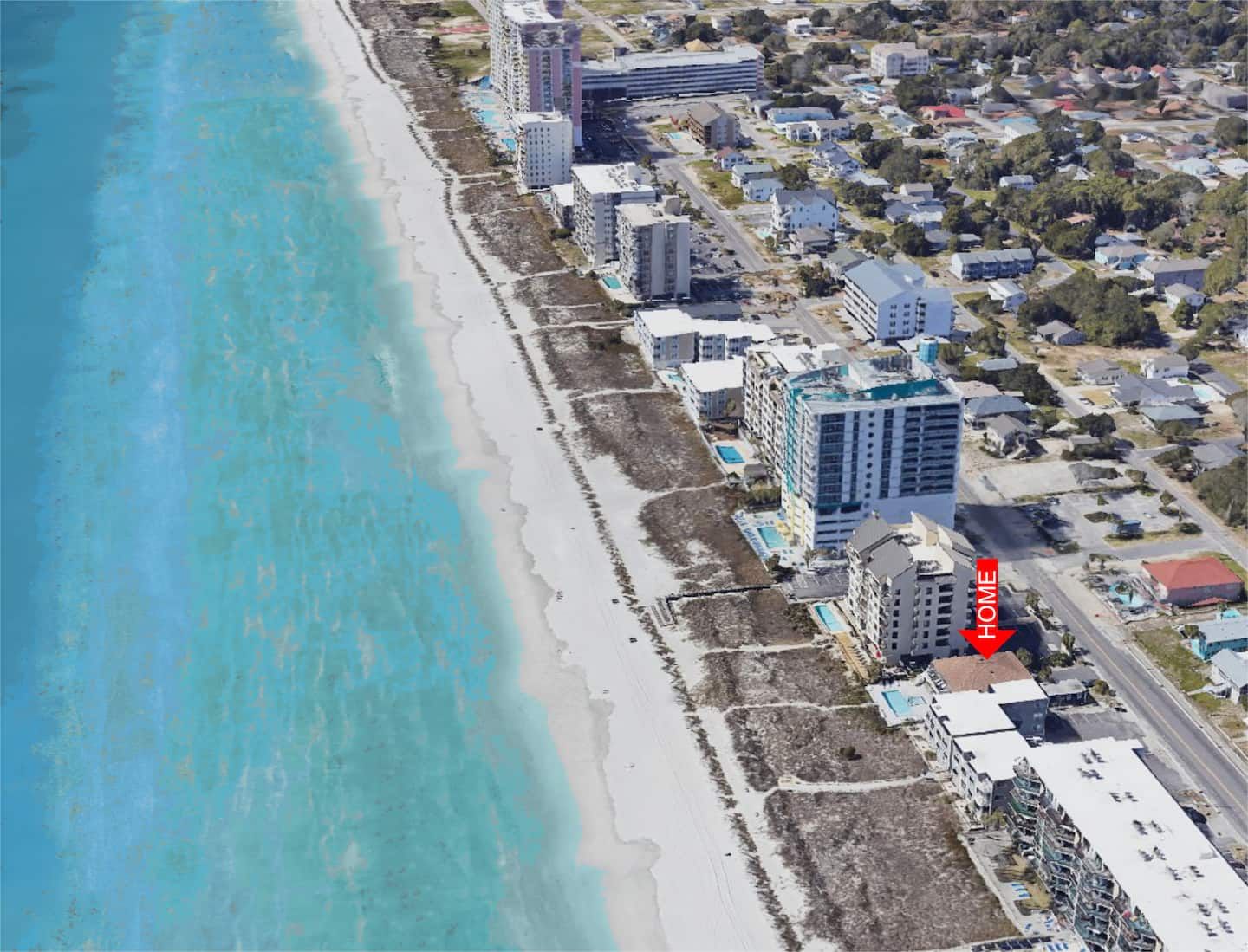
Find Which Government Oversees Your Rental
The Myrtle Beach Business License Division says every rental-property owner needs a city business license. The city reviews zoning for every application. Some applications also need inspections, safety plans, or approval from other city departments.
The city's short-term rental zoning guidance defines short-term rentals as stays shorter than 90 days. Most traditional residential neighborhoods exclude these rentals. Districts labeled R generally prohibit them, with RMV as an exception. Before buying a property or turning it into a rental, get written confirmation of what its zoning allows. For an existing rental, obtain records supporting any claimed lawful grandfathered use.
| Where the home sits | Local license and review | What to find out for the address |
|---|---|---|
| City of Myrtle Beach | City business license and zoning review | Whether the property allows vacation stays |
| City of North Myrtle Beach | City business license and annual renewal | Which property and guest rules apply |
| Unincorporated Horry County | County business license and zoning requirements | Zoning district, uses the county has approved, and required permits |
If the mailing address names a different city, get written confirmation of whether the property is inside city limits or in unincorporated Horry County. Save written rental approval for the property with your application records. Each property needs permission based on its own zoning and history.
North Myrtle Beach Rental License Rules
The North Myrtle Beach short-term rental requirements require every short-term rental to have a business license renewed each year. Operators must collect and pay applicable accommodations taxes and follow the city's trash, parking, noise, and occupancy rules.
The city currently says short-term rentals have no special zoning or permit process beyond standard licensing. Building work, changes in how a property is used, and existing property approvals still need review under the rules that apply to that work or use.
Tell guests the approved guest limit, where to park, and when trash is collected. North Myrtle Beach rental management includes keeping these guest instructions and license records current. Choose an owner or manager to respond to problems and keep these instructions and records where the next person handling a booking can find them.
Horry County Rental Licenses and Zoning
Homes outside city limits follow Horry County's business-license and zoning rules. The county's zoning ordinance requires uses of land and buildings to be allowed in their district. Its use tables list permitted activities and required approvals.
The county business-license office handles businesses located or operating in unincorporated Horry County. Its licensing instructions describe zoning compliance review for a first business in commercial space and life-safety review when the occupancy-use classification changes. Rental alterations and conversions need the approvals applicable to their work and building classification. Save the approved layout and approval conditions.
Before buying a home or substantially changing its rental use, get the county's written answer on whether the address can host the stays you plan to offer. Describe any proposed building work accurately so the appropriate department can identify the permits it requires.
Rental Occupancy and Property Approvals
Set the advertised guest limit from the property's applicable approvals, building and fire-safety requirements, wastewater capacity where relevant, and private restrictions. Keep the written basis for that limit with the rental records. A listing's bedroom count, bunk beds, or advertised capacity provides marketing information; the legal occupancy limit comes from the rules and approvals governing that property.
For a large house, describe its actual sleeping layout and intended guest count when requesting address-specific review. Resolve any difference between the existing approved layout and proposed sleeping rooms before publishing the listing. The approved capacity also shapes a property's oceanfront rental income, because the listing and revenue assumptions need to reflect the guests it can legally accommodate. Provide parking instructions and the approved guest limit in the booking terms and arrival message.
South Carolina Rental Tax Registration
The South Carolina accommodations tax rules generally apply to sleeping accommodations rented for fewer than 90 consecutive days. The state charges 5% sales tax and 2% accommodations tax. The South Carolina Department of Revenue, or SCDOR, also collects applicable local sales and use taxes. County and city lodging charges may require separate tax accounts and payments.
If you take direct bookings, you generally need a state Retail License, which lets you file and pay accommodations tax. SCDOR says owners who rent exclusively through a property management company or online travel company that books the stay and accepts payment do not need this license. In that arrangement, the company pays the tax on the full booking.
The state also has a limited Retail License exception for owners who rent for no more than one week each calendar quarter. Those owners still file and pay the tax annually. If you take direct bookings at multiple rental locations, each needs its own Retail License. These South Carolina rental management tax duties apply alongside the city or county's separate requirements for permission to rent.
Rental Taxes Paid Through SCDOR
SCDOR's municipal tax-rate schedule lists a 10% accommodations rate for Myrtle Beach and 9% for North Myrtle Beach and unincorporated Horry County. These totals include the 5% sales tax, 2% accommodations tax, and local taxes collected by SCDOR. Add the county and city charges collected separately to calculate the full guest bill.
For a hypothetical $2,000 in charges fully taxable by SCDOR, the amount paid through SCDOR is $200 in Myrtle Beach and $180 in North Myrtle Beach or unincorporated Horry County. Report with the city's codes for homes inside city limits and the unincorporated county codes for homes outside them.
Which Guest Charges Are Taxable
SCDOR taxes mandatory cleaning fees at the 7% state accommodations rate plus applicable local tax. Its guidance treats optional cleaning services differently. Property-management and online-travel-company service fees also count toward the rental cost taxed by the state.
For a hypothetical direct booking with $2,000 in rent and a mandatory $200 cleaning fee, calculate the state taxes on $2,200. The 5% tax is $110 and the 2% tax is $44, for $154 before other applicable taxes. Your management contract separately defines which charges the manager uses to calculate their fee.
Record rent, mandatory charges, optional services, refunds, and taxes separately. Save records showing what each booking channel paid to the tax authorities. Match those payments to the taxable booking charges so you can identify any tax you still need to file and pay.
Horry County Hospitality Fees
The Horry County hospitality fee schedule sets the county charge on short-stay accommodations at 3% of gross proceeds outside city limits and 1.5% inside city limits. Gross proceeds are the receipts subject to that fee. Calculate city charges and taxes paid through SCDOR separately under each authority's rules.
The county excludes accommodations supplied to the same guest at the same location for 90 consecutive days from its hospitality fee. Reports are due on the twentieth of the month after the reporting period. When the office is closed, the county applies its next-open-business-day rule. County accounts with zero receipts still need a zero report.
For a hypothetical $2,000 fully subject to the county fee, 3% is $60 outside city limits and 1.5% is $30 inside city limits. Add the applicable SCDOR and city charges to work out the full guest bill, using each authority's rules for which charges are taxable.
City Lodging Charges and Payment Dates
The Myrtle Beach municipal tax instructions require accommodation providers to collect a 0.5% city local accommodations tax and a 1% city hospitality fee. These city charges add up to 1.5%. The county separately collects its 1.5% inside-city hospitality fee, and SCDOR collects its taxes separately too.
For a hypothetical $2,000 fully taxable by every authority, Myrtle Beach's city charges are $10 and $20, the county fee is $30, and the taxes paid through SCDOR are $200. The total is $260. For actual bookings, calculate each charge using the amount that authority taxes, including its rules for mandatory services.
North Myrtle Beach's hospitality-fee instructions set a 1.5% city fee on gross proceeds from short-stay accommodations. The city excludes sleeping accommodations supplied to the same person for 90 continuous days or more. File and pay the city fee monthly by the twentieth of the following month. Pay county hospitality fees and SCDOR taxes through their separate accounts.
The hypothetical comparison below assumes every authority taxes exactly $2,000. Actual taxable amounts depend on each authority's treatment of cleaning fees, refunds, and optional services.
| Rental location | Taxes paid through SCDOR | County fee | City charges | Example total |
|---|---|---|---|---|
| Myrtle Beach | $200 at 10% | $30 at 1.5% | $30 at 1.5% | $260 |
| North Myrtle Beach | $180 at 9% | $30 at 1.5% | $30 at 1.5% | $240 |
| Unincorporated Horry County | $180 at 9% | $60 at 3% | $0 city charge | $240 |
Myrtle Beach also requires monthly reports for its city hospitality fee and local accommodations tax, due on the twentieth after the reporting month. Match payments to the city, county, and state accounts separately so you know which bills you have paid.
Nightly Rental Tax Calculator
Enter rent for one taxable night, before taxes. The calculation assumes the same rent is taxable by every authority for a short stay. Cleaning, booking fees, optional services, exemptions, discounts, and longer-stay rules are outside this calculation. Each component rounds to the nearest cent before the total is added, so a booking platform's full-stay bill can differ.
The state portion is 5% sales tax plus 2% accommodations tax. Local taxes collected through SCDOR bring that subtotal to 10% in Myrtle Beach and 9% in North Myrtle Beach and unincorporated Horry County. The calculator adds the separately collected county and city charges once: the combined rates are 13%, 12%, and 12%, respectively.
Keep Licenses and Property Records Current
City and county business licenses let you carry on the rental business under local rules. A state Retail License sets up your tax-filing duties. When comparing Myrtle Beach management companies, identify who keeps the licenses and tax records current. Read the restrictions in the property's homeowners association declarations, condominium documents, deed, lease, loan, and insurance terms so you know what each allows and requires.
Myrtle Beach business-license renewals are due by April 30 under the Business License Division's instructions. North Myrtle Beach requires annual renewal and current license information. Save each license and its renewal date alongside your tax filing deadlines.
SCDOR requires electronic accommodations tax filing and payment, generally by the twentieth after the filing period. If you have an active state Retail License, you still need to file a return for a period when a company handled every booking and paid the taxes. SCDOR directs owners to report zeros for that period.
Ten Owner Checks Before Taking Bookings
- Identify the property's parcel number and the government covering its street address.
- Save the zoning district and written confirmation of the proposed rental use.
- Obtain records supporting any existing approval or grandfathered rental use.
- Document the approved layout and complete permits required for planned work.
- Set the guest limit using the property's applicable occupancy and safety approvals.
- Review association documents, deed restrictions, loan terms, and insurance for your intended rentals.
- Obtain the local business license and record its renewal deadline.
- Determine whether direct bookings require a state Retail License and open applicable local tax accounts.
- Assign responsibility for each state, county, and city tax payment and reconcile channel remittances.
- Calendar returns, zero reports, license renewals, and guest-instruction reviews before the first stay.
Myrtle Beach Management Fees and Owner Duties
Checkmate's Myrtle Beach management starts from 10% of nightly rent, with a 10%–15% range confirmed after property review. Homes near the beach or in strong locations favor the lower end. Cleaning and additional fees are excluded from the commission calculation. Keep the property's permissions, licenses, and tax records with the management agreement, and name who handles each filing and renewal.
Bottom Line
Find which city or county oversees your property and get written confirmation that it allows your planned rentals before taking bookings. Complete the required business licenses and tax accounts, and keep the property's private restrictions with those records. For every booking, track which charges are taxable and who pays each state, county, and city bill. Keep filing returns and renewing licenses for as long as those duties apply.