
Utah Code Section 10-8-85.4 prevents a municipality from using an ordinance that prohibits short-term renting to punish an owner solely for listing or offering a rental on a short-term rental website. This online-listing protection does not authorize an otherwise prohibited rental or waive zoning, licensing, inspection, or operating requirements. Municipalities may require a license or permit and enforce actual rental violations with additional evidence.
Temporary lodging is subject to state and local sales and transient room taxes, with the combined rate determined by the property's address. Salt Lake City, Park City, and Moab add their own licensing and land-use requirements; Moab restricts short-term lodging in residential zones. HOA rules and other private restrictions can prohibit renting even where public rules allow it.
Utah Short-Term Rental Rules at a Glance
- State permit: Utah has no universal statewide short-term rental operating license.
- Local authority: Cities and counties can require a business license, permit, land-use approval, or inspection.
- Online listings: Municipalities cannot use rental-prohibition ordinances to punish an owner solely for listing or offering a rental online; actual operating violations remain enforceable.
- Taxes: Temporary lodging can carry sales tax and state, county, municipal, or other transient room taxes.
- Thirty-day stays: Qualifying stays of 30 consecutive days or longer receive the exemption described in Utah Publication 56.
- Management: Checkmate Rentals publishes pricing that starts at 15% of the nightly rate with no annual agreement.
Utah State Law and Local Enforcement
Utah Code Section 10-8-85.4 permits municipalities to require a license or permit. It prevents punishment under a rental-prohibition ordinance based solely on listing or offering a rental online. A listing may support a case when the government also has evidence that the property operated in violation of local rules.
Utah Code Section 17-78-1102 applies the parallel framework to counties. These protections govern evidence and enforcement. They leave local zoning, licensing, and operating requirements in place.
How the Listing Rule Works
An online listing or offer alone cannot support punishment under a municipal ordinance prohibiting short-term renting. Reservation records, guest activity, payment records, complaints, inspections, or other evidence can show actual operation. Local authorization governs whether the property may operate; the statutory listing protection limits punishment based solely on the online offer.
Utah Lodging Taxes
Utah State Tax Commission Publication 56 explains that temporary lodging is subject to sales tax and transient room tax. The total can include state and local sales taxes, statewide transient room tax, county tax, municipal tax, and location-specific components. The Commission's transient-room-tax page provides current rate and filing resources.
Publication 56 treats lodging for 30 consecutive days or longer as exempt from sales and transient room taxes when the stay meets its requirements. A host should retain the agreement, folio, payment history, and continuous-occupancy records supporting that treatment.
Worked Utah Tax Example
Suppose a five-night reservation has $1,500 in nightly charges and a required $200 cleaning charge. The taxable lodging subtotal is $1,700 when both charges are taxable. At a hypothetical combined lodging-tax rate of 13.5%, tax is $229.50 and the guest total is $1,929.50. The 13.5% rate is an illustration; the current rate must come from the exact address.
Marketplace and Direct-Booking Taxes
A marketplace may collect taxes for covered platform reservations. The owner remains responsible for required registrations and returns, direct bookings, channels outside the marketplace agreement, and reconciliation. Monthly records should identify the taxable subtotal, collection party, jurisdiction, filing account, and remitted amount for every stay.
Salt Lake City Short-Term Rental Rules

Salt Lake City's short-term rental page requires a business license in an approved zoning district before advertising or accepting bookings. Under the standard rule, a licensee holds one short-term rental business license covering one property and one dwelling unit; the city separately allows the multi-unit-building allocation described below. Each licensed property must display the city-provided notice inside and near the front door.
Salt Lake City Rental Limits and Documents
- Stays must last at least two consecutive nights; each licensed rental is limited to 200 rental nights per calendar year.
- Owners of buildings containing more than 11 dwelling units may license up to 10% of the units: a 30-unit building may license three. Each rental unit needs its own license.
- The application identifies the property owner, local contact, and emergency contact and includes government-issued identification.
- An applicant acting for the owner needs a property authorization form. Condominium applicants need an HOA letter authorizing the short-term rental.
Salt Lake City Budget Example
A property earning $60,000 in annual nightly-rate revenue has $9,000 in management compensation at a 15% rate. If licensing, professional support, and safety work total $2,200, those items bring the subtotal to $11,200 before cleaning, utilities, insurance, maintenance, taxes, and repairs.
Park City Nightly Rental Rules

Park City's nightly-rental page requires a Nightly Rental License for qualifying stays shorter than 30 days where zoning allows the use. The process starts with zoning eligibility, then an application, activity number, Building Department inspection, passed inspection report, fees, and final approval.
The published application fee is $149 plus $28.74 per bedroom. A three-bedroom property therefore has a $235.22 license fee: $149 plus $86.22. Park City states that applications generally take 15 to 30 days. The property must receive approval before it is offered for nightly rental.
Park City First-Year Example
A three-bedroom rental earning $80,000 in nightly rates has $12,000 in management compensation at 15%. Adding the $235.22 license fee produces $12,235.22 before inspections, cleaning, utilities, maintenance, insurance, taxes, and repairs.
Moab Short-Term Rental Restrictions
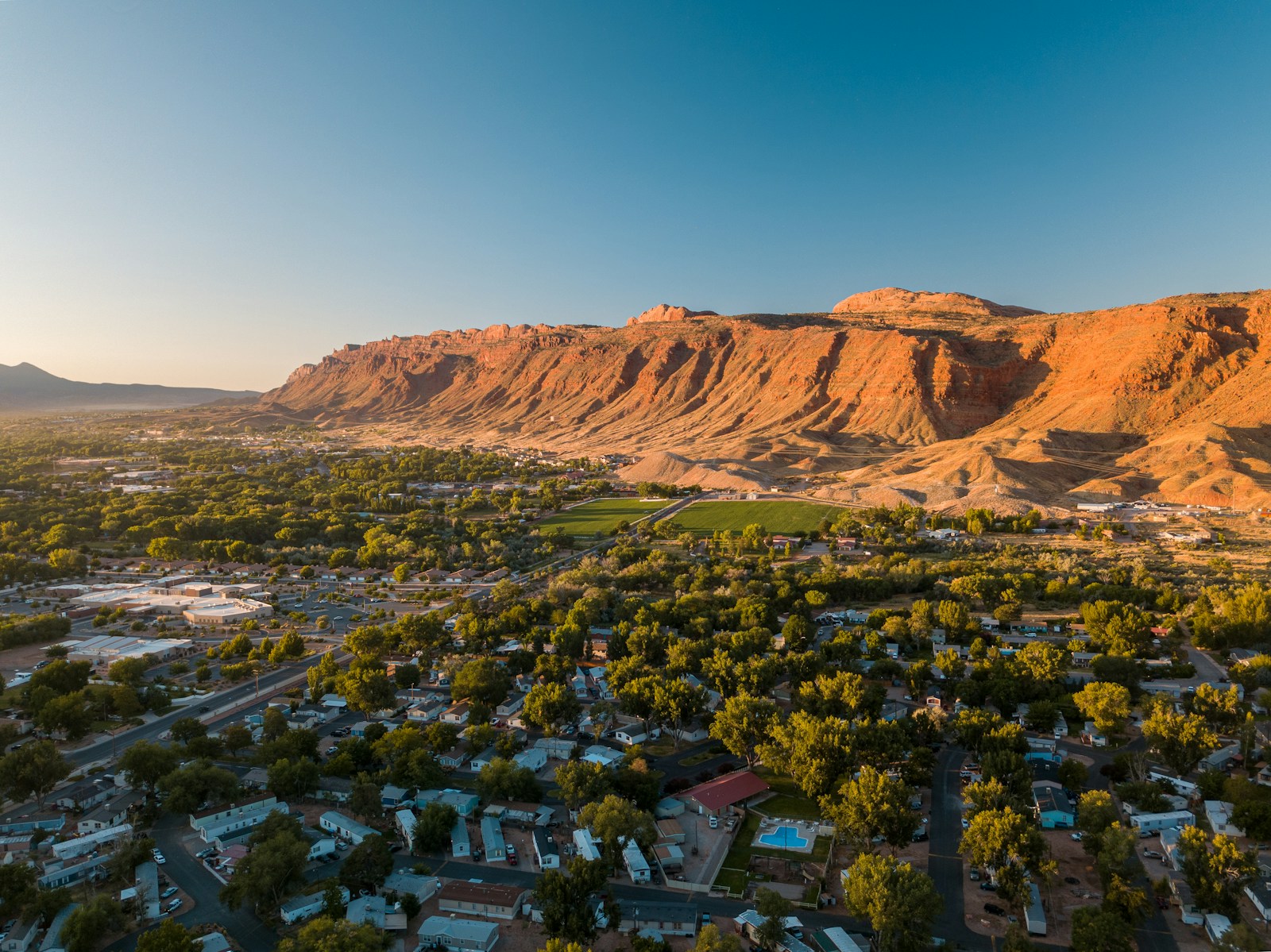
Moab's business-licensing page requires businesses operating inside city limits to obtain the applicable license. Zoning separately controls whether short-term lodging is allowed on the parcel.
Moab Code Compliance prioritizes residential-zone short-term rentals and unlicensed operation. Moab Municipal Code Section 17.09.700 prohibits dwelling rentals of 30 consecutive days or less in its listed zones and other zones where the use is not permitted.
Moab Accommodation Exceptions
The code makes exceptions for compliant bed-and-breakfast facilities, guest apartments, and accommodations for qualifying adaptive-recreation participants. These are specifically regulated accommodation uses, not permission to operate any residential property as a vacation rental.
The qualifying-participant definition covers accommodations on the same parcel as an adaptive recreational provider's primary use for enrolled participants, their immediate family or caregivers, program-support personnel, and employees. The provider primarily serves people with disabilities through professionally guided recreational or educational programs.
Private Property Restrictions
Condominium declarations, association rules, leases, mortgage terms, deed restrictions, and insurance policies may independently restrict or prohibit short-term renting. Local authorization leaves those contracts in force. Owners should retain the governing documents, amendments, written approvals, and insurance confirmation in the property compliance file.
Utah Host Compliance Workflow
- Identify whether the parcel lies inside a city or in unincorporated county territory.
- Verify the zoning district and whether short-term lodging is permitted, conditional, or prohibited.
- Obtain the business license, rental permit, land-use approval, and inspection required for the unit.
- Register and file with the Utah State Tax Commission when required.
- Calculate sales and transient room taxes from the exact address and booking channel.
- Reconcile platform-collected taxes with direct and uncovered reservations.
- Document occupancy, parking, alarms, exits, noise, trash, emergency contacts, and required postings.
- Track permit expirations, renewals, tax returns, private approvals, and material property changes.
Utah Management Cost Example
Checkmate Rentals' published pricing starts at 15% of the nightly rate with no annual agreement. At $96,000 in annual nightly-rate revenue, 15% equals $14,400. Management compensation is one budget line alongside cleaning, supplies, utilities, insurance, maintenance, permits, inspections, taxes, and capital repairs.
The management agreement should assign responsibility for listing control, payouts, pricing, guest support, cleaning, inspections, and maintenance approvals. It should also address tax work, records, future reservations, and exit procedures.
Utah Short-Term Rental FAQs
Does Utah Require a Statewide Short-Term Rental License?
Utah has no universal statewide operating license. City and county requirements depend on the parcel.
Can a City Use an Airbnb Listing as Evidence?
A municipality cannot use an ordinance prohibiting short-term renting to punish an owner solely for listing or offering a rental online. Additional evidence can support enforcement of an actual operating violation.
When Is a Utah Lodging Stay Tax-Exempt?
Publication 56 describes an exemption for qualifying stays of 30 consecutive days or longer. The lodging provider should retain records supporting the continuous stay.
How Much Does Utah Short-Term Rental Management Cost?
Checkmate publishes pricing that starts at 15% of the nightly rate with no annual agreement. Total property cost also includes local approvals, taxes, and physical operations.
Utah Owner Compliance Requirements
A compliant Utah rental combines local land-use approval, required licenses and inspections, address-specific tax accounts, private-property authorization, and complete operating records. State listing protections limit punishment under rental-prohibition ordinances based solely on an online listing or offer. Local rules continue to govern actual operation.