
Airbnb hosts need a thermostat that keeps guests comfortable without allowing vacant-day energy waste or extreme temperature settings. The strongest options combine dependable remote control, clear guest operation, practical temperature limits, useful scheduling, HVAC compatibility, and pricing that fits the property, with sensors and deeper reporting adding value for larger or more demanding rentals.
The best thermostats for Airbnb and short-term rentals are:
- Ecobee Smart Thermostat Premium/Enhanced: Best Overall
- Google Nest Thermostat: Best for Simplicity and Google Homes
- Emerson Sensi Smart Thermostat: Best Budget Option
- Honeywell Home T9/T10 Pro Smart Thermostat: Best for Large or Multi-Zone Properties
4 Best Thermostats for Airbnb and Short-Term Rentals
The "best" thermostat for your rental depends on your budget, existing technology, and management priorities. Like WiFi smart locks for rentals, these connected devices can work together as part of your automation system to enhance guest comfort, from climate control to quality TVs for Airbnb. The following top contenders excel in different areas, making them suitable for various host needs.
Checkmate host shortlist
Four quick choices
Start with the rental problem you need to solve, then read the full product breakdowns below.
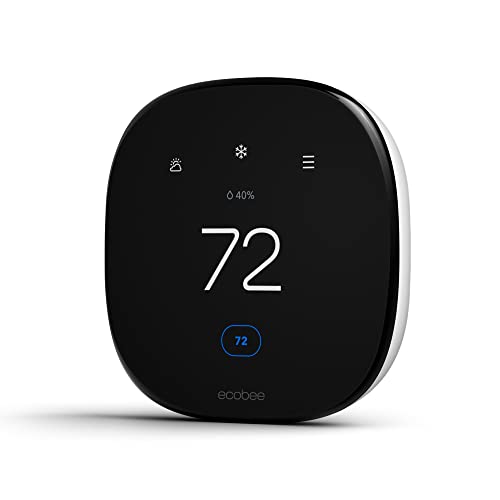 ecobee Enhanced
Hands-off comfort
Checked Aug 13, 2026$183.81Buy It Now on Amazon
Simplest control
ecobee Enhanced
Hands-off comfort
Checked Aug 13, 2026$183.81Buy It Now on Amazon
Simplest control
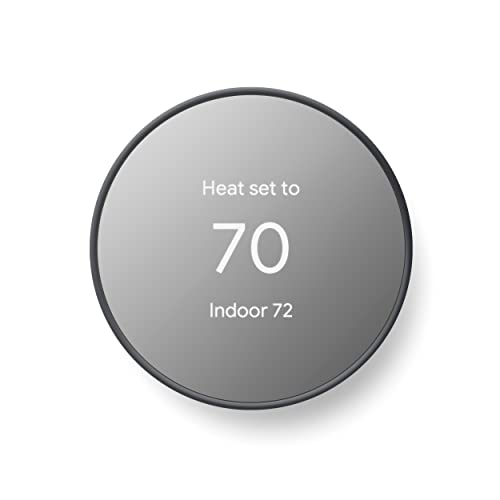 Google Nest
Easy Google Home control
Checked Aug 13, 2026$118.49Buy It Now on Amazon
Best value
Google Nest
Easy Google Home control
Checked Aug 13, 2026$118.49Buy It Now on Amazon
Best value
 Sensi ST55
Full features, lower price
Checked Aug 13, 2026$99.00Buy It Now on Amazon
Best multi-room
Sensi ST55
Full features, lower price
Checked Aug 13, 2026$99.00Buy It Now on Amazon
Best multi-room
 Honeywell Home T9
Comfort across rooms
Checked Aug 13, 2026$191.09Buy It Now on Amazon
Honeywell Home T9
Comfort across rooms
Checked Aug 13, 2026$191.09Buy It Now on Amazon
Verify HVAC and C-wire compatibility before ordering. Product details and available prices were refreshed through Amazon Creators API on Aug 13, 2026. Prices and availability may change. As an Amazon Associate, Checkmate may earn from qualifying purchases.
Best Overall: Ecobee Smart Thermostat Premium/Enhanced
Best For: Hosts who want maximum control, detailed data insights, and are willing to invest in a premium product that pays off through efficiency and guest satisfaction.
Key Features:
- Outstanding mobile app with intuitive remote access and comprehensive controls.
- Easy-to-configure temperature limits and scheduling options for varied occupancy.
- Includes a remote sensor that can be placed in a key room (like the master bedroom) to ensure comfort throughout the property, not just where the thermostat is mounted.
- Superior energy reporting with actionable insights
- Vacation mode is perfect for rental properties.
- Works with multiple voice assistants, including Alexa built-in on the Premium model.
The ecobee is one of the top smart thermostats for Airbnb properties in extreme climates or with multiple zones, as the additional sensors ensure consistent comfort. The initial investment ($200-$250) pays for itself through energy savings and reduced management headaches.
Downsides: The higher price may be hard to justify for budget-conscious hosts or smaller properties, especially when combined with other investments like WiFi smart locks for rentals. Some advanced features and sensors are overkill for simple, single-zone units. The setup process is more involved than some competitors.
Best for Simplicity & Google Homes: Google Nest Thermostat
Best For: Hosts who prioritize sleek design, user-friendly interfaces, and are invested in the Google/Android ecosystem.
Key Features:
- Exceptionally intuitive interface on the device and in the app
- Stylish design that enhances modern decor
- Seamless integration with Google Home and Assistant
- Solid scheduling and remote control capabilities
- Suggestions for saving energy based on usage patterns
- Installation is easier than that of some competitors.
The Airbnb nest shines in aesthetically appealing properties for less tech-savvy guests. It offers excellent value at a mid-range price ($130-$180 depending on model) while maintaining essential features for hosts.
Downsides: The temperature restriction features are less straightforward than Ecobee's. Instead of direct lockouts, you'll need to implement them through scheduled temperature ranges, which can be less intuitive to set up as a hard "lock." The learning features, while innovative for homes, should be disabled for rental properties as they create inconsistent experiences for rotating guests.
Best Budget Option: Emerson Sensi Smart Thermostat
Best For: Budget hosts who want core smart features without the premium price.
Key Features:
- Offers essentials: remote access, flexible scheduling, and temperature limitations.
- It often doesn't require a C-wire for installation, making it compatible with older HVAC systems.
- A simple, straightforward app interface
- Works with multiple smart home platforms
- DIY installation
- Excellent value at $80-$130
The Sensi provides essential functionality for a rental property without unnecessary bells and whistles, making it perfect for hosts optimizing multiple properties without breaking the bank.
Downsides: The app and interface are more utilitarian than luxurious. The energy reporting features are less robust than premium options, and the physical design is more conventional. Some advanced scheduling options require more manual setup.
Most Versatile Pro Option: Honeywell Home T9/T10 Pro Smart Thermostat
Best For: Hosts with large or multi-zone properties, or those wanting professional-grade control and reliability.
Key Features:
- Exceptional support for remote sensors that average temperatures across multiple rooms
- "Pro" versions offer contractor-level controls for permanent, tamper-resistant limits.
- Highly customizable programming options
- Robust geofencing capabilities for owner use, not guests
- Excellent reliability record
- Strong performance in larger or complicated spaces
This is the ideal remote thermostat for vacation rentals where reliability and precision are paramount. The multi-room sensing capability is valuable for larger properties with varying temperatures.
Downsides: The interface can be complex to set up initially. Some powerful features are in the "pro" settings which require professional installation or a learning curve. The price point ($150-$200 plus additional sensors) is higher than budget options but justified by the expanded capabilities.
Why Your Standard Thermostat is a Liability in a Vacation Rental
The standard thermostat in your property is costing you more than you realize. In a short-term rental environment, what works well in a homeowner setting can become a liability.
Guest Behavior. Unlike residents who pay their own utility bills, guests have little incentive to be energy-conscious. They're on vacation and prioritize comfort. This often means setting the air conditioning to arctic levels in summer or cranking the heat to tropical levels in winter, and leaving these settings running 24/7, even when they're out exploring.
The lack of control and visibility with a standard thermostat is problematic. Once your guest checks in, you relinquish all control over your property's climate. You can't remotely confirm that heat is maintaining minimum temperatures during a winter vacancy to prevent frozen pipes. You can't pre-cool the unit before a guest arrives on a sweltering summer day. You're in the dark until the next turnover or an alarming utility bill.
This creates serious operational inefficiency. Without remote access, every climate adjustment requires a physical visit. Between bookings, someone must manually adjust settings to energy-saving modes and readjust before the next guest arrives. This time-consuming process is easy to forget in the rush of turnover cleaning, resulting in wasted energy and unnecessary costs that impact your rental's profitability. Implementing proper energy-saving tips for Airbnb properties starts with addressing this issue.
6 Must-Have Thermostat Features for Your Rental
When you choose a thermostat for your vacation rental, you're not looking for gimmicks or flashy features. You need practical tools that solve real management challenges. These six features are essential to protect your property, improve guest experience, and maximize profits.
1. Remote Access & Control
The key feature that transforms property climate management is remote access. It allows you to monitor and adjust temperature settings from anywhere using a smartphone app. The practical applications are invaluable: pre-heating or cooling the property before guests arrive (especially in extreme weather), verifying settings during vacancy to prevent damage, and assisting guests remotely if they have trouble operating the system.
2. Temperature Lockouts & Range Limits
The most important cost-saving feature is an Airbnb thermostat lock (or temperature range limit). It allows you to set minimum and maximum temperature thresholds that guests cannot override; for example, preventing the AC from being set below 68°F or the heat from going above 74°F.
These limits balance guest comfort and energy efficiency. Guests can adjust settings within a reasonable range, but you're protected from extreme energy waste and costs. For a Miami property in summer, this might save hundreds of dollars per month compared to unrestricted temperature controls.
3. Smart Scheduling for Vacancies
Unlike residential thermostats with a consistent schedule, rental properties need flexible scheduling for irregular occupancy. The ability to easily toggle between "Occupied" and "Vacant" profiles is essential for maximizing energy savings during booking gaps.
The advanced options offer vacation rental automation through integration with booking calendars like Airbnb and VRBO. These systems automatically adjust climate settings based on your reservation schedule, cooling or warming down before guests arrive, maintaining efficient temperatures during occupancy, and switching to energy-saving modes after checkout. This automation eliminates human error and ensures you never waste energy heating or cooling an empty property.
4. Simplicity and Ease of Use for Guests
A confusing thermostat guarantees negative reviews and late-night support calls. The ideal rental thermostat features an intuitive interface that any guest can understand within seconds, regardless of their technical savvy.
Look for devices with clean, well-lit displays and straightforward controls for basic temperature adjustments. Guests shouldn't have access to program settings or complex features; they simply need to be able to make minor adjustments within established limits. The goal is to make climate control forgettable; guests should be comfortable without thinking about the thermostat.
5. Energy Usage Reports
Knowledge is power in managing your rental's operating costs. Advanced smart thermostats provide detailed reports showing how many hours your HVAC system ran, when it was most active, and how your energy usage compares to previous periods.
These insights let you measure the impact of your temperature policies, identify HVAC system issues early, and make data-driven decisions about upgrades. Over time, these reports help you achieve significant energy savings and optimize your property's efficiency, turning your thermostat into a valuable business intelligence tool.
6. Smart Home Integration
Integration with voice assistants like Amazon Alexa or Google Assistant can enhance the guest experience and set your rental apart, much like EV chargers for Airbnb properties. This feature allows guests to control the temperature using voice commands (*"Alexa, set the temperature to 72 degrees"*), adding modern convenience.
Smart home integration positions your property for future expansion into a fully integrated smart rental ecosystem. It connects your thermostat with smart locks, lighting, security systems, and other devices for comprehensive remote management. For hosts focused on creating premium, tech-forward accommodations, this capability is a valuable differentiator.
A Note on "Homeowner" Features to Avoid
Smart thermostats offer benefits for vacation rentals, but features designed for homeowners can create problems in a rental context.
A prime example is geofencing. This feature uses a phone's location to automatically trigger "Home" or "Away" modes as people come and go. While great for a personal residence, it's impractical for a rental. It requires every guest to download the thermostat app, create an account, and grant location permissions, something no traveler will do. The result? Your thermostat might stay in "Away" mode (with energy-saving but uncomfortable temperatures) even when guests are present.
Learning algorithms in devices like the Nest identify patterns in a home's occupancy and temperature preferences over time. In a residential setting, this creates personalized, efficient schedules. However, in a rental with changing occupants, these algorithms become confused by inconsistent patterns, causing unpredictable temperature changes that frustrate guests. Disable these learning features immediately and establish fixed, predictable schedules that you control.
Streamline Your Rental Beyond the Thermostat
Installing the right thermostat is a big step towards running a smarter, more profitable rental. But it's often just one piece of a larger puzzle. Managing guest communication, cleaning schedules, maintenance issues, and pricing optimization can feel like a full-time job, consuming time you'd rather spend enjoying property ownership benefits or focusing on expansion.
Checkmate Rentals, a full-service co-host, can transform your business. We handle everything from smart home tech implementation to 24/7 guest support and dynamic pricing, while you retain full ownership of your listing and its reviews. If you're ready to enjoy the profits of your rental without the stress, see how our nationwide management service can help.
Conclusion
A smart thermostat for your Airbnb or short-term rental offers one of the highest ROI investments. The initial cost, $80 to $250, pays for itself quickly through energy savings, improved guest satisfaction, and reduced management stress. Remote access and temperature limits transform a liability into a powerful asset that protects your investment.
With this information, you can confidently select the best thermostat for your Airbnb that aligns with your needs and budget. Whether you choose an Ecobee, a Nest, or a Sensi, you're optimizing your rental operation. Your future self and bank account will thank you for this smart decision that benefits both your guests' comfort and your profitability.